
The Palazzo Menu Project, 3

When the People Met The Menu: Proof, Performance, and What Remained

A menu isn’t finished when it’s designed. It’s finished when people respond to it. Up until this point, everything had happened in controlled environments; tastings, revisions, discussions, assumptions. Chapter 3 is where assumptions ended.
This was the moment the menu met reality.
The Night Of
The first major tasting wasn’t intimate. It wasn’t forgiving. It was full.
Roughly eighty guests, spanning ages, backgrounds, professions, and expectations, filled the space. Among them were creatives, professionals, public figures, and people who knew good food when they tasted it. We had a huge turnout of people from Benue State which I loved so much considering they are a people who take food seriously.
There was no script to follow now. No opportunity to explain intention. Only response. And response came quickly.
Traditional dishes led the conversation. Seafood dishes dominated attention. Appetizers designed to pair with alcohol steadily did their job; driving bar sales without needing to be announced. People ordered seconds. They asked questions. They compared plates and made enquiries about future availability and deliveries, indicating deeper interests. That’s how we knew it is working.

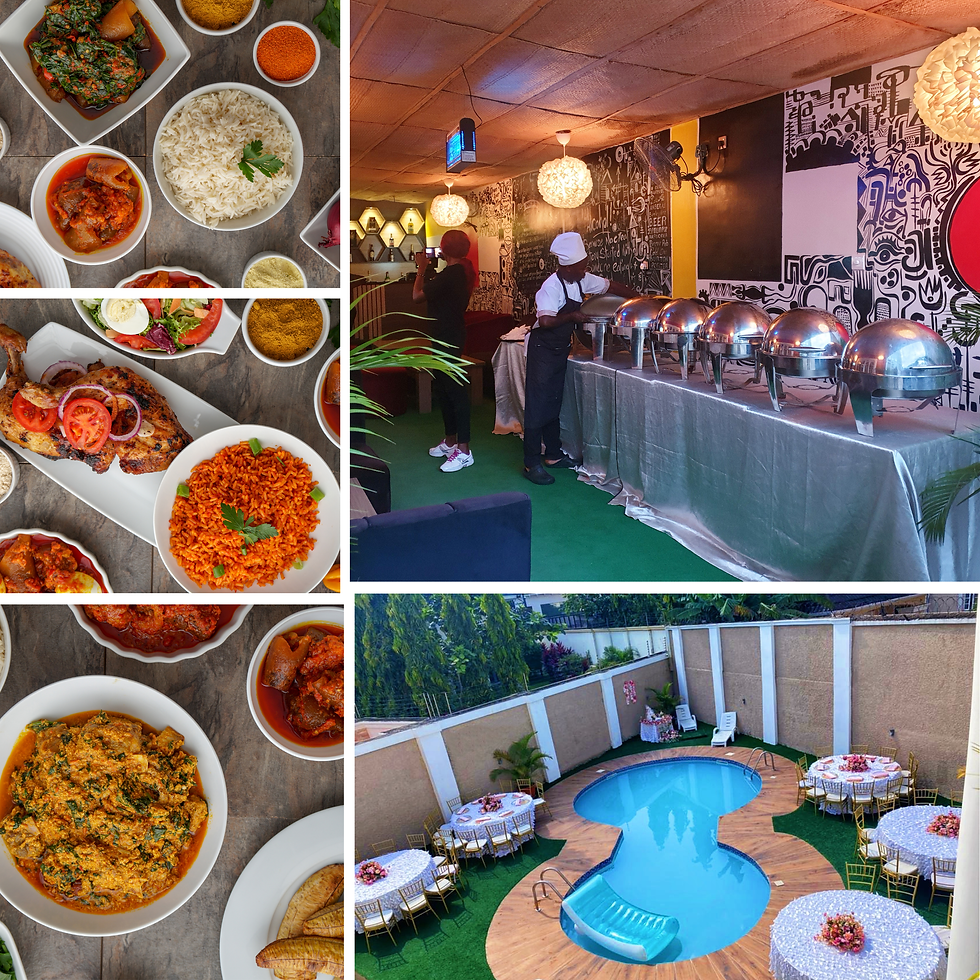
What Performance Really Looks Like
Success in hospitality isn’t applause, it’s behaviour. Over the following weeks, patterns became clear:
Certain dishes consistently outsold others
The kitchen found rhythm instead of stress
Service became faster and more confident
Guests returned and reordered
Recommendations began travelling faster than promotions
And then the metrics followed. The kitchen recorded its first profitable month. The hotel’s limited rooms were fully booked and guests were actually ordering from the kitchen, not seeking culinary experiences outside the hotel. No more dispatch riders trying to gain entrance to deliver meals to patrons. Online engagement grew steadily, not from ads, but from experience, storytelling, promotional marketing and referrals. The menu didn’t just support the hotel. It fed it.
What This Project Ultimately Became
Looking back, this was never just a menu project.
It was:
a complete course in creative restraint
a study in cultural instinct
an exercise in creative judgment
a reminder that taste and design must serve people, not ego
The strongest parts of the menu weren’t the cleverest. They were the clearest. That clarity came from listening, cutting, refining, and trusting patterns over opinions.
What I Would Do Differently
Every project leaves residue, things you’d keep, and things you’d sharpen. If I were to revisit this type of work now, I would insist on deeper control over visual storytelling within the menu itself: photography, background textures, and section atmospheres that mirror the emotion of the food more deliberately. It’s a discipline I now apply rigorously in my current work, including a very special project I am presently involved in that is deeply rooted in the global distribution of a newly emerging spice brand, where visual language and naming are developed in tandem, not culture and resonance.

The Night Cap
Menus don’t succeed because they are beautiful. hey succeed because they are understood. They work when they guide people effortlessly, toward choice, comfort, and memory. The Palazzo menu did exactly that. And when I stepped away from the project, the restaurant didn’t collapse. It continued to grow and expand, building on the foundation of a timeless and unshakable system.
That, to me, is the real measure of good creative work.

Final Reflection
This series wasn’t written to romanticize the process (hahaha maybe a little). It was written to clarify it and touch point on the not-so-obvious drivers of creative development. Because good creative work — especially for a professional like me, who gets to dip their feathers in different types of industries and businesses, in different continents, for different cultures, sometimes for the first time ; lives quietly between understanding, relation, intention, execution and evolution. When done well, needs no explanation. It just works.
End of Series
-


Comments